
Rebecca Schwarz | Director of The Nature Place
I never wanted to be a scientist. I like people and the outdoors, not math and tests. But it’s funny how life teaches us to look at things differently. When I came aboard as director of The Nature Place, I had the opportunity to learn lots of things, including how math, tests, people, and the outdoors are not mutually exclusive. In fact, they are necessary parts of any effort to care for the world we live in. I’ve also learned that there’s no better way to experience this than participating in a community science program!
What’s community science? Those were my thoughts exactly when I first took on my role at The Nature Place, where people and nature connect for the benefit of both through the variety of programming and services we offer. In essence, community science invites community members, laypeople like me, to help scientists collect data about a wide variety of subjects, but usually plants or animals.
“With the community’s help… scientists benefit from community science by being able to collect data on a much larger scale, allowing for broader analysis of important trends impacting the environment.“
Camden Meyer, AmeriCorps Member 2026
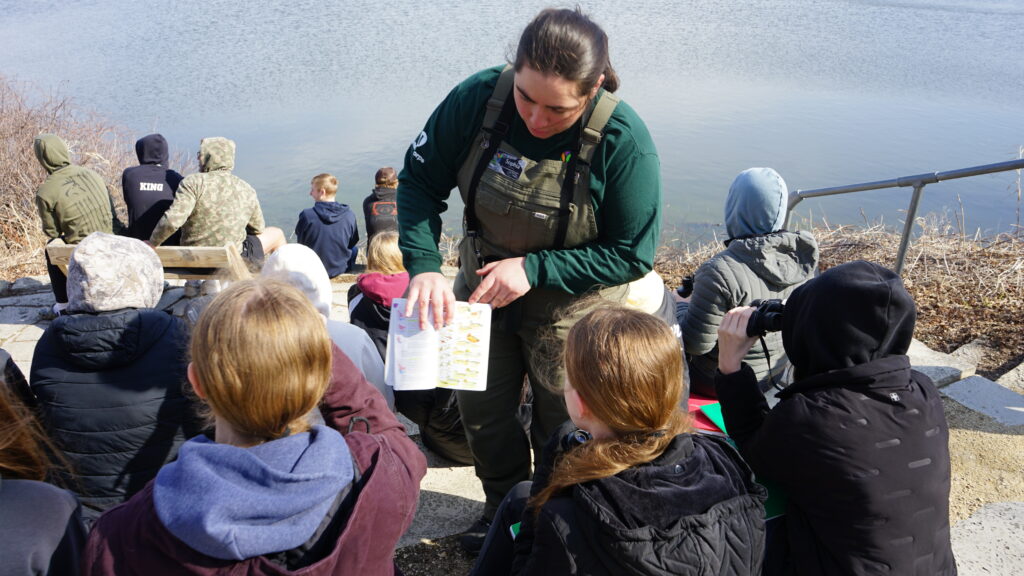
I participated in my first community science program at The Nature Place’s Driftless Area BioBlitz, i.e., DABB, this spring. It happened to fall on World Migratory Bird Day, so we learned about the birds around The Nature Place from birding expert and current AmeriCorps member, Sophia Sperduto. After a quick tutorial on how best to use the phone app, iNaturalist, a free app used by nature enthusiasts and scientists around the world to record and verify all sorts of natural phenomena, we set out to look for birds!
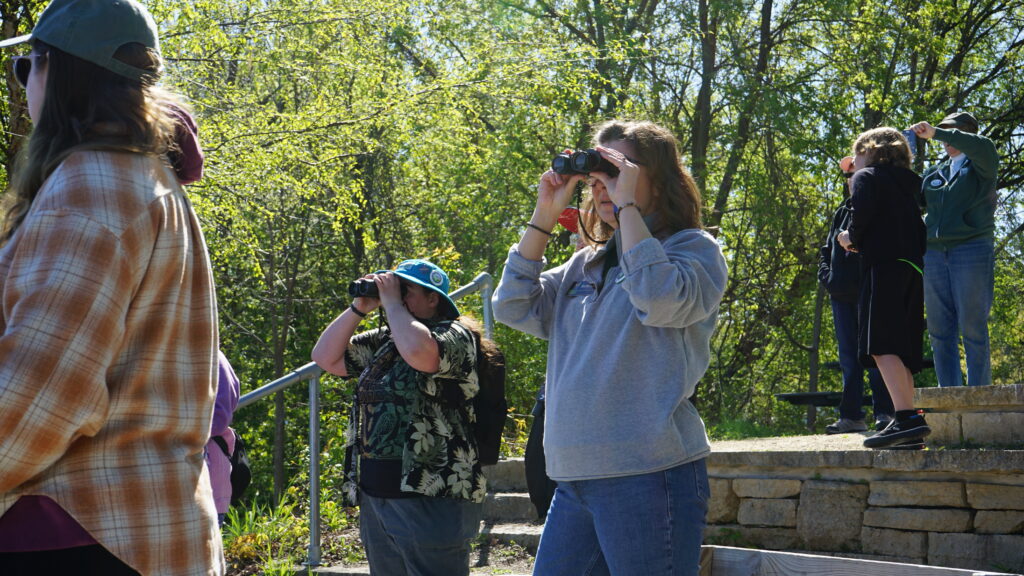
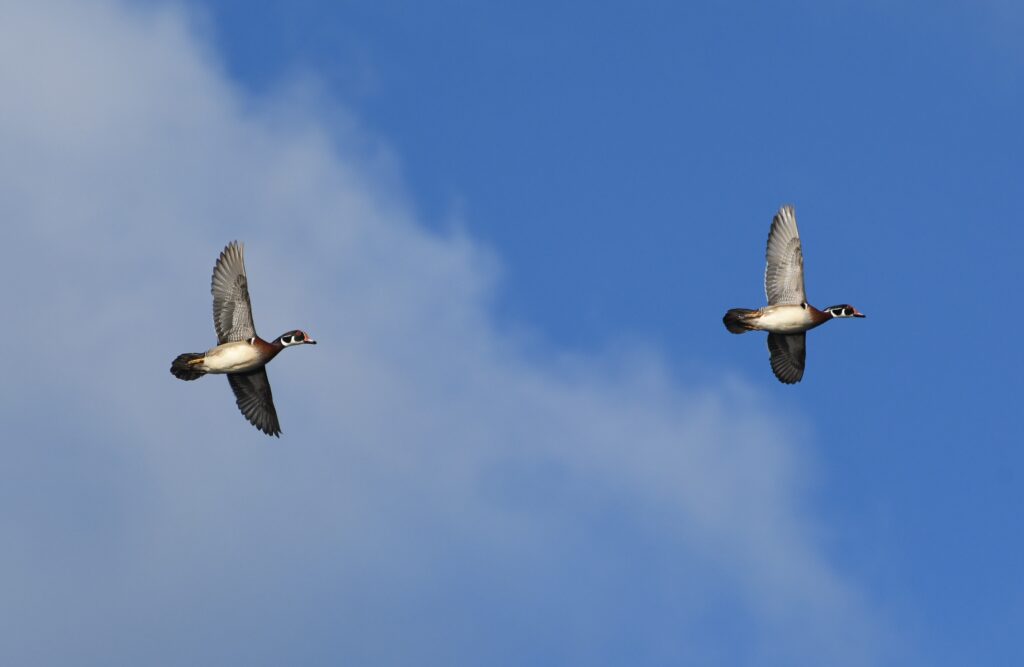
I learned that most birds we saw, or rather heard (we were lucky to catch sight of them, even with our binoculars), are migratory. Sophia explained that while there’s always an exception to the rule, especially if they’ve found a good year-round food source, often what we think of as year-round birds are just different birds migrating here from different places throughout the year. Of the robins, grackles, geese, wood ducks, cormorants, eagles, red-breasted black birds, mourning doves, warblers, and killdeer (there’s a clutch of eggs near The Nature Place that staff keep an eye on) that we identified, only the mourning doves are truly non-migratory.
One of the things I appreciated most about the BioBlitz event was access to an expert on the animal we were focusing on. As we walked around, binoculars focused on any flit or flicker, Sophia would call out the type of birds we were hearing and, usually after a pause, point in the general direction of where it was coming from. I find walking around with the birding book and my Merlin app (a free phone app that identifies birds based on their calls, compliments of Cornell University) a little bit clumsy. By the time I’ve identified something, it’s gone, and then I can’t be sure what I saw (heard) was what it was. As a novice birder, having Sophia with us added an element of context and story to my experience that made it much more enjoyable and informative.
The other aspect of the BioBlitz was simply practicing the art of paying attention; yes, to the birds, but also to the larger ecosystem. Why does the killdeer lay her eggs in relatively the same grassy spot year after year? Wow, those robins look like they are dive-bombing everyone walking the marsh path! Look at how low the heron flies. Where did those wood ducks go? They were right there just a second ago! Oh, the fish are staring at us!
I’ve walked the marsh trails so many times, but the BioBlitz gave us a purpose; it focused us and helped tell a story. The others in the group had their own stories to share. Birds they’ve seen. Birds they search for. What they love about this part of the marsh or the Driftless Region.
The natural world can be experienced in solitude. I relish a bit of alone time in the outdoors. But there is something special about experiencing it with others, in a community of learning and curiosity. Okay, so there wasn’t a test, per se. And we’re going to let the scientists do the big math with the data collection we contributed to via iNaturalist. But we were contributing in a way that will have a big impact. And people came together, outdoors, to take action that supports our environment. So, no, I’m not a scientist, but I am doing my part to help them protect the environment. And it was fun!
Join The Nature Place for future Driftless Area BioBlitz events and learn more about community science on our website.
- June 20th – Precious Prairies at Stry Prairie – Hixon Forest Park
- July 25th – Dragonfly Discovery at The Nature Place
- August 15th – Fascinating Fungi at The Nature Place
- September 12th – Incredible Insects at The Nature Place
List of commonly sighted migratory birds in the La Crosse River Marsh:
- Canada Goose*
- Wood Duck
- Mallard*
- Hooded Merganser
- Killdeer
- Pied-billed Grebe
- Double-crested Cormorant
- Great Blue Heron
- Osprey
- Bald Eagle*
- Tree Swallow
- Northern Rough-winged Swallow
- Barn Swallow
- American Robin*
- White-throated Sparrow
- Song Sparrow
- Red-winged Blackbird
- Common Grackle
- Palm Warbler
- Yellow-rumped Warbler
*These birds are migratory, but may have individuals that stick around all winter, if they have the habitat (food, open water, etc)