
Kailyn Wittrock | Gardens & Grounds Assistant
I have always loved insects. Something about their beady eyes, shiny carapaces, and delicate wings has always been appealing to me. Working alongside the insects in the Nature Place’s Gardens and seeing them up close has only increased my appreciation for them. But I understand why some people might need a little more convincing; bugs get a bad rap. Many people’s main experiences with insects have been as creepy crawly home invaders with scary stings or bites. But in the wild and in our gardens, it’s a very different story. Insects play a vital role in every ecosystem they inhabit, from pollinating to decomposing to predating. The world as we know it couldn’t exist without them. When we take the time to learn more about and get a closer look at our insectoid neighbors, we can come to better appreciate everything they do for us and our environment.
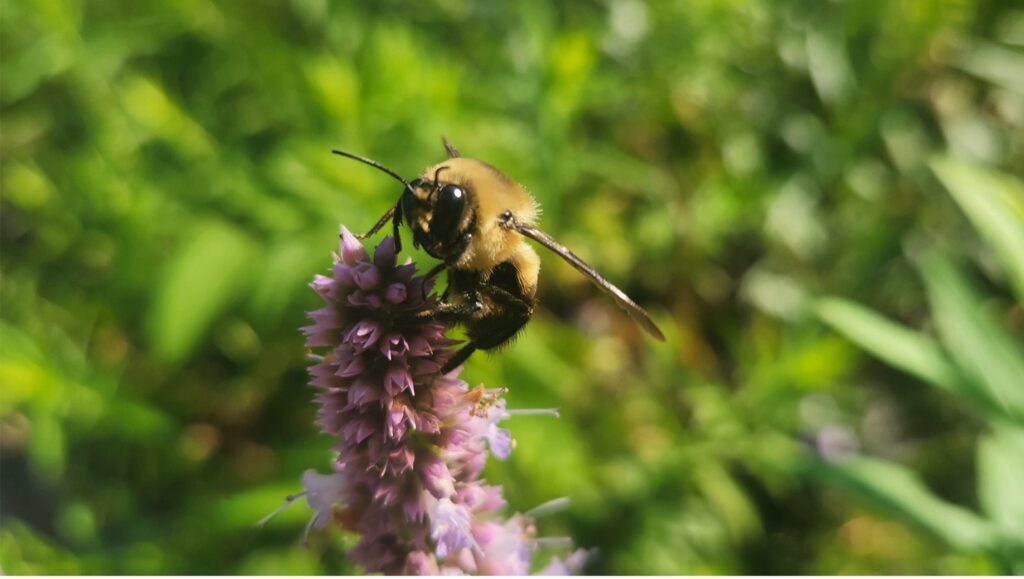
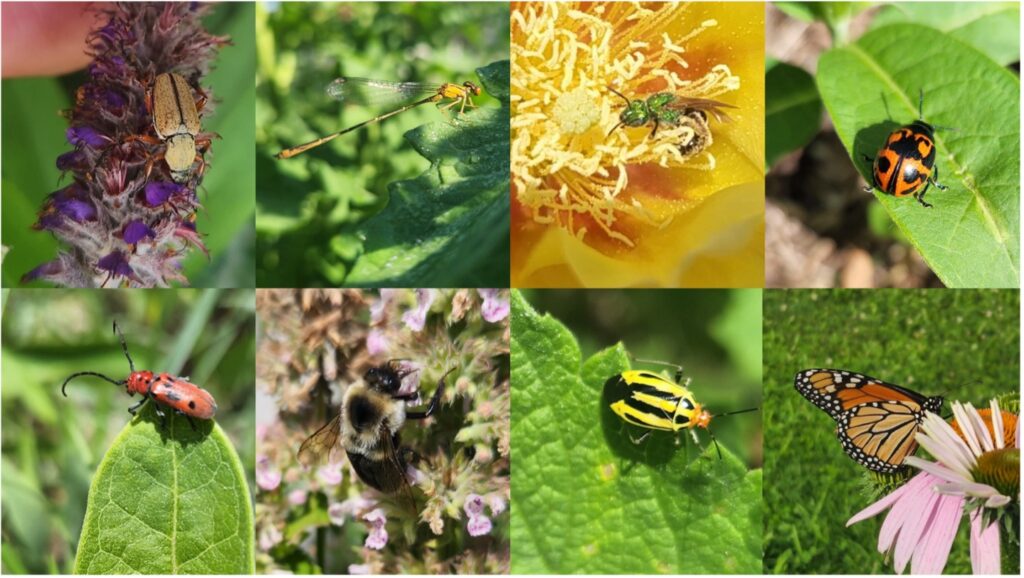
So, what insects can we find in our gardens?
With there being somewhere between 2 – 30 million insect species in the world, figuring out what exactly you’re looking at can be a daunting task. A good place to start is by identifying what order an insect belongs to. Some common orders of insects include:
- Lepidoptera (Moths and Butterflies)
- Coleoptera (Beetles)
- Diptera (True Flies)
- Hymenoptera (Ants, Bees, Wasps, and Sawflies)
- Hemiptera (True Bugs, Hoppers, Aphids, and Allies)
- Orthoptera (Grasshoppers, Crickets, and Katydids)
- Odonata (Dragonflies and Damselflies)
But if you want to dive deeper, I’ve found iNaturalist to be a useful resource in getting more specific information on what insects are living in our gardens. iNaturalist is an online network of scientists, naturalists, and nature enthusiasts that allows users to photograph and identify different species of plants and animals. Uploading nature observations to the site also helps to create a repository of data that is used by scientists and conservationists.
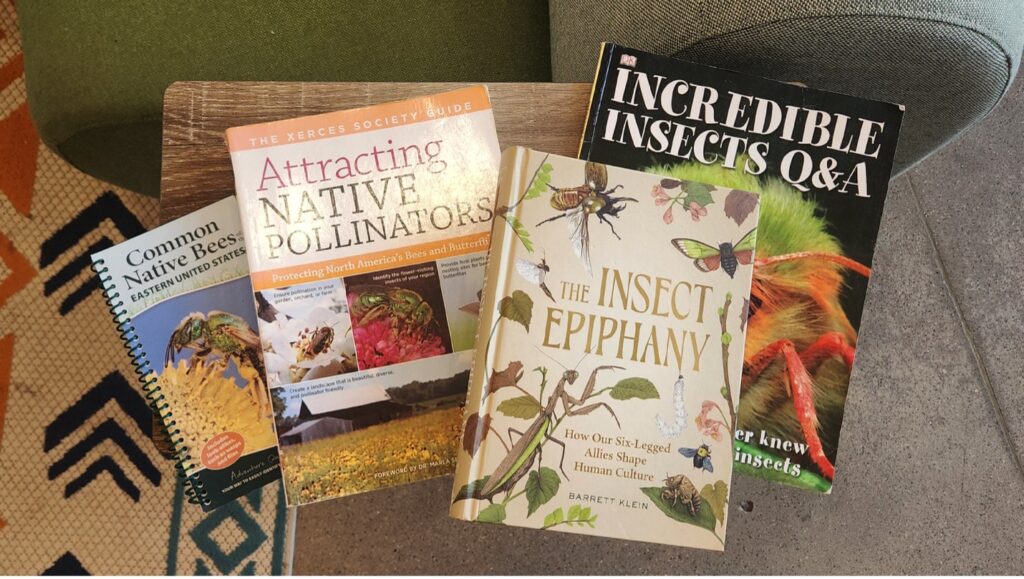
Once you’ve figured out what kind of insect you’ve found, you can dive right into the research rabbit hole. Finding information either online or through physical resources, some of which can be found on The Nature Place’s bookshelves, is a great way to connect with and learn more about the natural world we live in.
For me, diving into the wonderful world of insects has turned the outdoors into a delightfully endless scavenger hunt. I’m always on the lookout for new and interesting creatures that can be found hiding under leaves or whizzing through the air. Having the patience to try and snap a photo of the interesting insects I find reminds me to slow down and appreciate the beauty in the little things which are so often overlooked. And learning more about all the amazing and intricate roles that insects play in our ecosystems has given me a greater appreciation for the meticulous balance that it takes to keep our world running.
So, next time you see an insect out and about, take a closer look, snap a photo, and take the time to learn something new about the wonderful world of insects.