

Steph Hanna | Community Program Manager
At this time of year, our September mornings, afternoons, and evenings sometimes aren’t as lovely as Neil Diamond, one of my favorite singers, describes them in his song, September Morn. Sometimes, we can be plagued by September swarms of very persistent critters, known as wasps. The most common kinds of wasps in Wisconsin are yellowjackets, paper wasps, and bald-faced hornets.
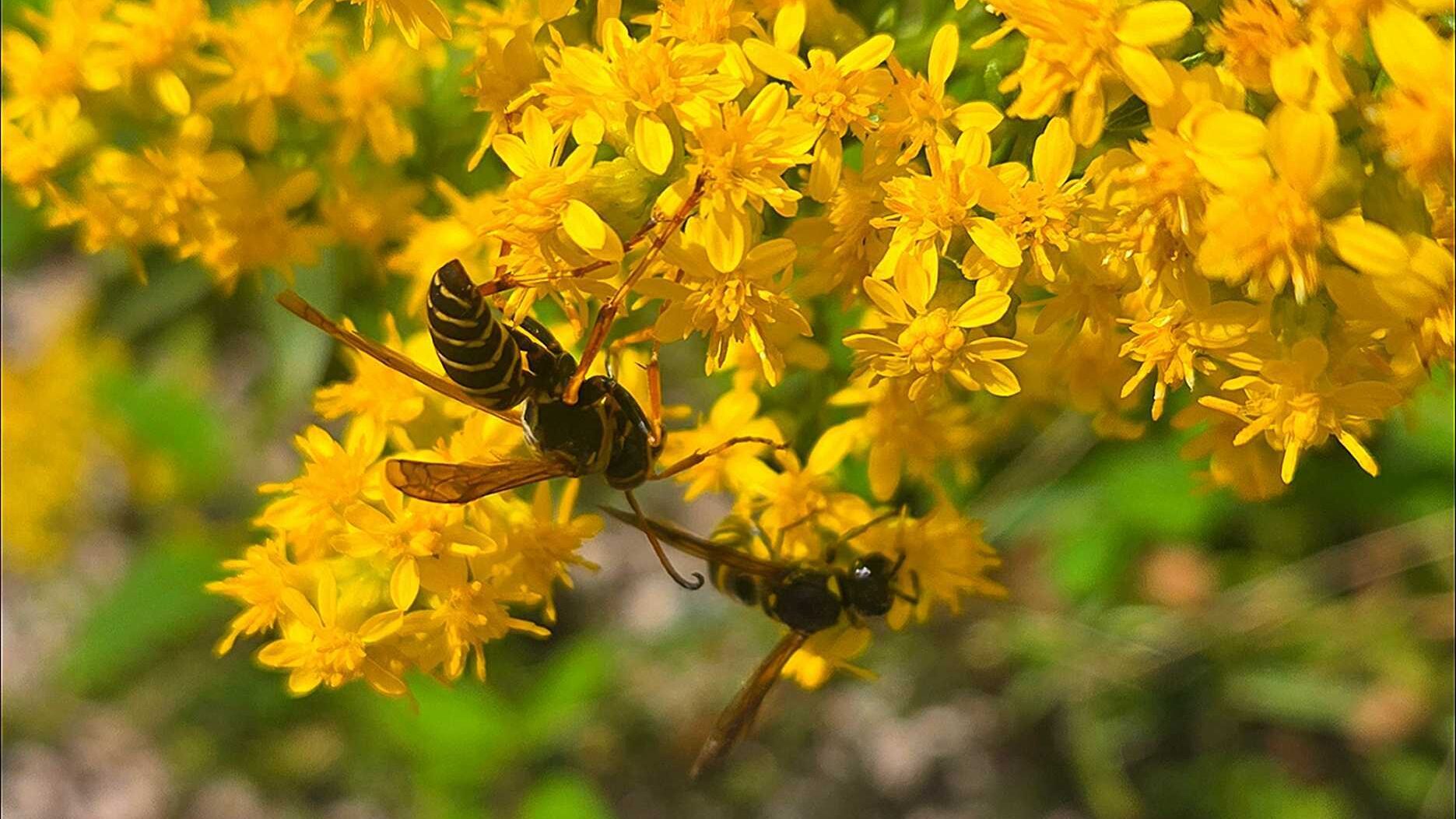
“What is going on with wasps at this time of the year?” my neighbor asked me after complaining that her morning coffee on her deck has not been as pleasant.
“Where were they in spring and summer?” she said.
During those spring and summer months, the queen was busy laying eggs, and the workers were occupied with expanding the nest and feeding the developing larvae with protein sources like caterpillars and flies.
When September comes around, the larvae are all grown up, meaning there are a lot more wasps flying around. There are fewer natural food sources, like flowers and nectar, and worker wasps are searching for sugar to help the colony survive. This makes them more likely to check out people, including the food and drinks they might be enjoying outdoors. Your soda, fruit juices, ice cream, alcoholic beverages, and even garbage cans become targets for hungry wasps looking for a quick boost of energy.
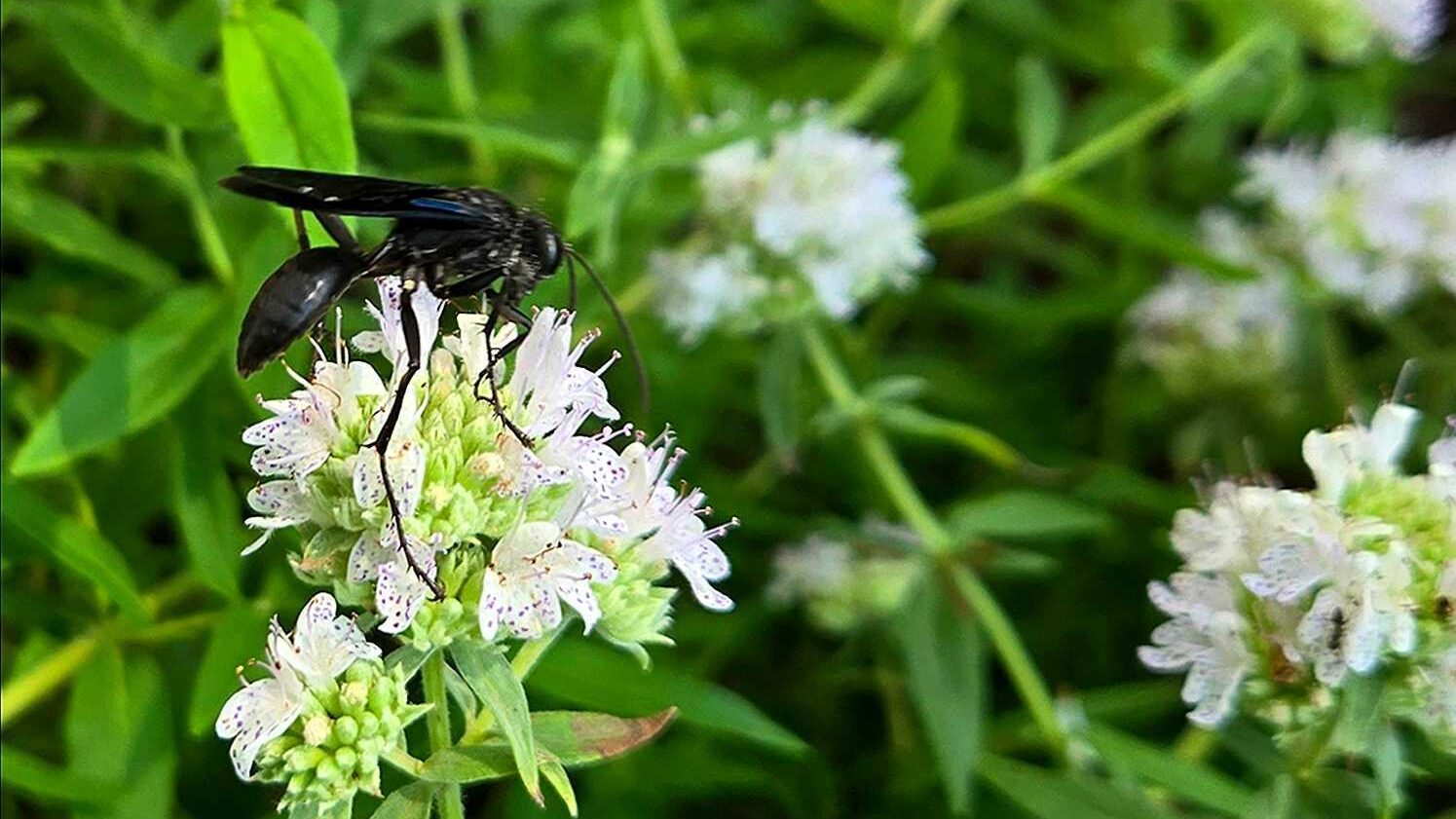
There is also a change in the social structure of wasps in September. The queen stops laying eggs that will become worker wasps and instead starts producing new queen wasps and male drones for the next generation. When the old larvae pupate and leave the nest, the adult worker wasps that were feeding them lose their primary source of food. During the summer, the larvae were fed protein by the workers, who would secrete a sugary, carbohydrate-rich liquid that the larvae would eat. In other words, the workers have been laid off from their job and need to look for their own food.
Soon the weather will cool, and the newly mated queens will leave the nests and start looking for a safe place to overwinter. They will hibernate in places such as tree bark, woodpiles, and even attics or sheds. Because of this search for shelter, you might suddenly find large wasps crawling near your window frames. While on my lunch break today, I discovered a large umbrella paper wasp near my back door. Due to the cool September air, she was moving slowly, with patience and quiet deliberation. I only hope she finds a cozy place to hibernate somewhere far away from my house!
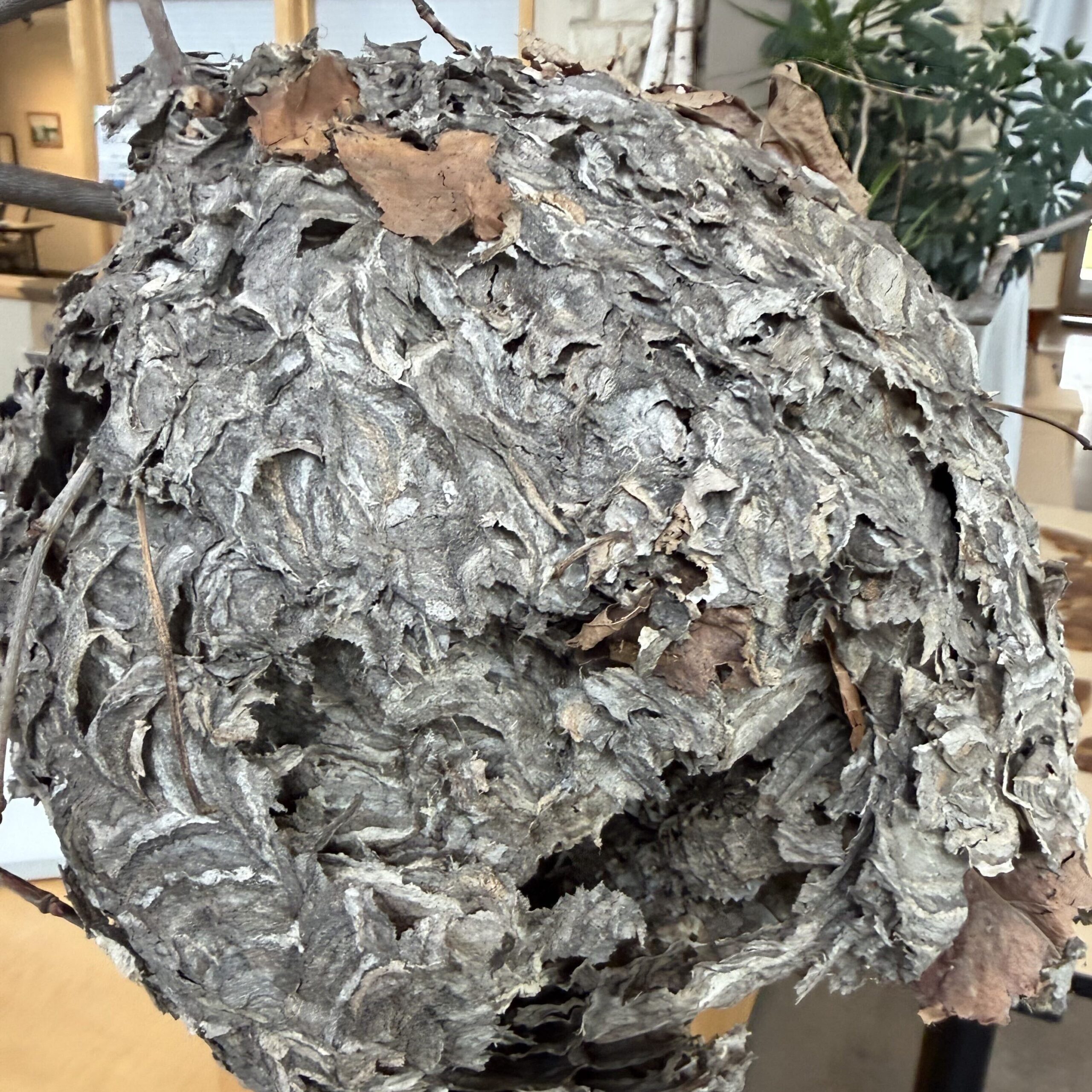
To avoid these unwanted guests:
- Cover your food and drinks when outdoors.
- Keep your garbage can lids tight-fitting.
- Check and seal up tiny cracks in your home’s siding, windows, and foundation
- Avoid swatting them – Wasps have a great sense of smell. By staying still, the wasp will recognize you are not a food source and will fly off within a few seconds.
Always remember that wasps are a very important part of the ecosystem. They are natural pest predators – they eat a lot of mosquitoes! They help pollinate plants and are a vital source of food for other animals such as birds. Here at The Nature Place, you might see wasps flitting about in our native gardens, going from flower to flower. Having native gardens is important to supply food and habitat to native wildlife and helps us connect and understand more about all creatures in nature, even the ones we prefer not to get too close to. And that’s what The Nature Place is all about – connections with each other and with all of nature.