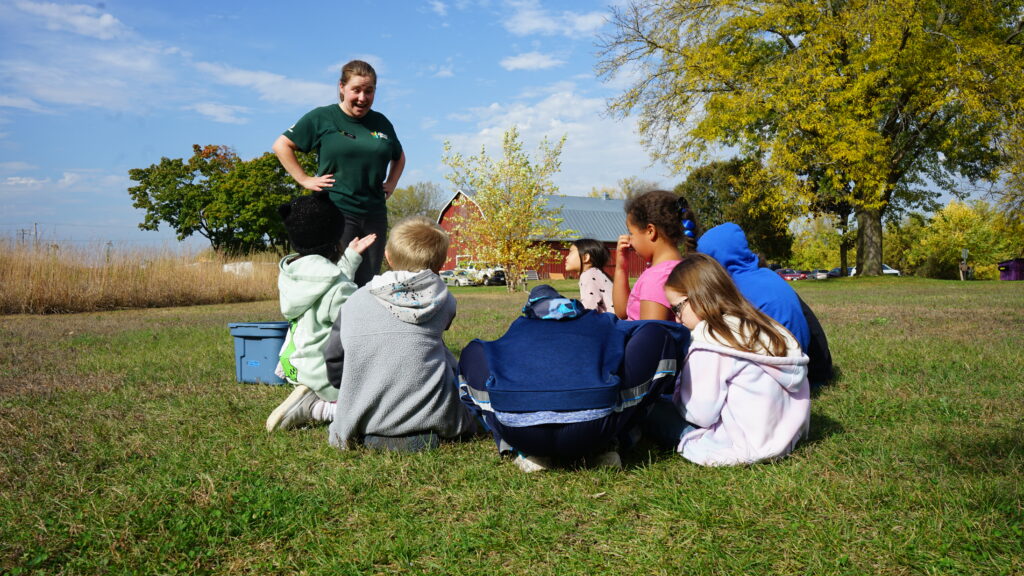

Jesie Johnston | AmeriCorps Member
While existing in a world which is subject to rapid technological advancement, the psychological benefit of being present in nature can become lost. So quickly it has become easy to strain the mind and eyes with media and screens, and so quickly many of us have lost our special connections to the world around us.
A sense of discovery erupts within us at a young age, and the most powerful step we can take to nurture that is taking a step right outside our doors. Exploring nature with children helps them gain the ability to hone in on and sharpen their senses and flex their natural curiosity and creativity in a natural environment.

I personally cannot remember a time when I didn’t love going outside. Whether it be for a simple quick walk down the street, or hours of playing in the sun or snow – the drive to exist in the natural world feels truly innate. I have also, in retrospect, found myself to be the most at peace in these environments as well. So, as I’ve developed my curiosity for the human mind, I’ve yearned to adapt and connect it to my true passion – the outdoors. Throughout my time in college learning about psychology and development – I always knew it was with intention to learn about how our brains connect and coexist with the natural world around us. So why should we encourage our youth to get outside and have some fun?
Sunshine and Serotonin
The sunny days of the seasons always seem to bring people out of their dwellings for walks around town or even reading peacefully on a park bench. Why does sunshine give us the itch to exist outdoors? Sunlight helps boost serotonin levels, which not only elevates your mood but also supports overall mood regulation. Children are spending their youth constructing the building blocks of their minds for the long term – and something as simple as 20 minutes of sunlight every few hours can greatly assist emotional regulation and the ability to practice it in the future.
Naturally Lowering Stress
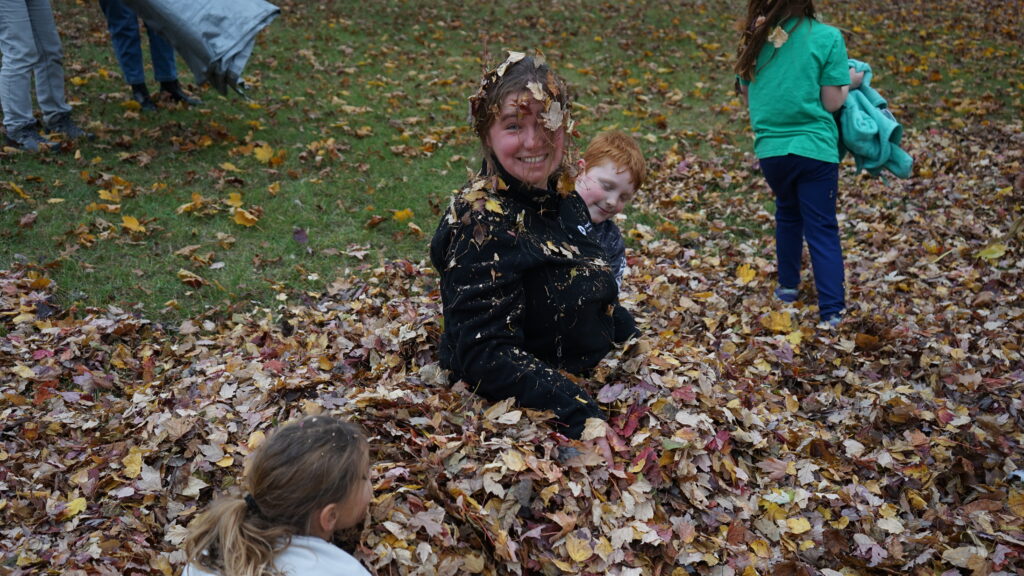
Have you ever sat in soft grass under a warm sun? Or on the porch during a breezy night, with the stars shining boldly in the sky? What about frolicking among the fresh-fallen leaves? Nature and mindfulness often go hand-in-hand. It is common for time spent connecting with nature to bring a sense of calm and peace. Spending time outdoors reduces stress by decreasing cortisol, the hormone your brain releases in response to stress. Children may experience and exhibit high amounts of anxiety as they develop, as they are changing rapidly to adapt to the world around them. A walk outdoors, a picnic, or playtime at the park can ease stress and anxiety while giving our eyes a break from screen strain.
Inquisitive Minds and Discovery
Our first step outside opens a multitude of diverse exploration choices we can make. Whether it be to look at the skies for flying birds and butterflies, or to dig under logs to find worms and burrowers. To say the outdoors is rich with opportunity would be an understatement. Alongside this fact is that it is also forever changing, increasing a child’s ability to adapt. The weather could change on a whim; the ground could be too hard to dig with a regular shovel – children could be presented with the ability to use creativity and outside-the-box thinking to learn how to overcome gentle obstacles – which gives them the stepping stones on how to adapt to more imminent or intense stressors in the future.
At the end of the day, it can feel so much easier to stay inside in the afternoons or on the weekend, but this could potentially have a negative effect on the growing minds of little ones. We don’t need airplane tickets or long drives to learn how to connect with nature. It can be as simple as a nature walk around the block, an outdoor story and picnic with friends and family, or weekend trips to our local parks.
Shaping Minds as an Environmental Educator
In working as an educator with TNP, I have been given the opportunity to not only experience, but to facilitate this growth in our younger generations. Through programs such as summer camps and wildlife programs, I get to look forward to each day in which our minds and bodies are shaped to be one with nature. Our camps and programming at TNP make it incredibly fun and versatile, and I think about how lucky I am to be able to work in such an incredible and impactful position.